
WHAT YOU NEED TO KNOW
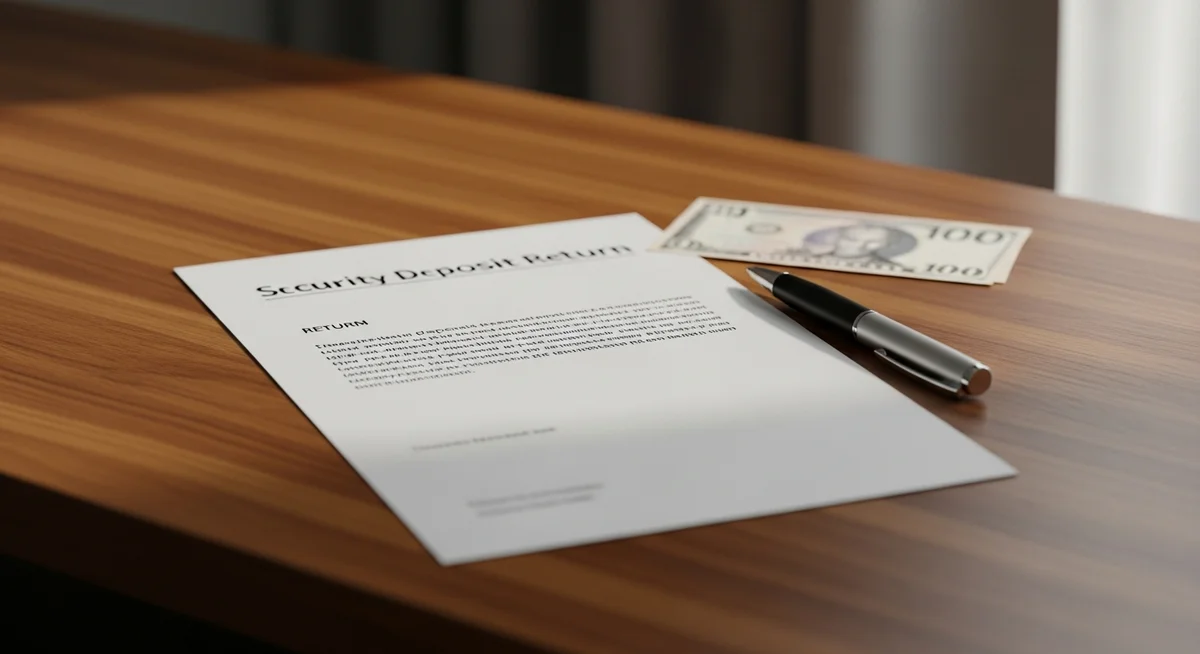
A security deposit return letter is a vital legal document that protects both landlords and tenants by detailing how much deposit money is returned, what deductions were made, and why.
- Landlords in all 50 states are legally required to account for security deposits, though deadlines to return funds range from 14 to 60 days.
- The return letter must include a highly detailed, itemized list of deductions for repairs or unpaid rent, excluding normal wear and tear.
- Failing to send this notice within state-mandated timelines can penalize landlords up to 3 times the original deposit amount in some jurisdictions.
Because landlord-tenant laws vary heavily by state, local statutes and your lease agreement dictate the exact terms and timelines you must follow.
What is a Security Deposit Return Letter?
A security deposit return letter is a formal written statement sent by a landlord to a departing tenant outlining how the security deposit is being distributed. This document details whether the tenant will receive a full refund, a partial refund, or no refund at all due to specific property damage or unpaid rent. It acts as an official record of accounting that protects both parties from future legal disputes.
This letter serves as a crucial legal record that helps resolve disputes before they escalate to small claims court. The document is often sent alongside a security deposit receipt form or a physical check. According to the Cornell Legal Information Institute, landlords have a fiduciary duty to handle these funds properly, making written documentation essential. Note that procedures and forms vary by state, and laws frequently change, so this is general information, not legal advice.
How Tenants Can Request a Security Deposit Refund
Tenants can request their funds by sending a formal demand letter for security deposit return directly to their former landlord. This written request should state the move-out date, provide the tenant’s new mailing address, and remind the landlord of the state-mandated return deadline. It establishes a clear legal starting point for the return window.
If you are a tenant, sending this document creates a clear paper trail showing you provided a forwarding address. It is best to send this letter via certified mail with a return receipt requested. This ensures you have physical proof of delivery if you need to take legal action later.
To ensure a smooth transition, tenants should follow a clear process when requesting their funds:
- Review your original lease agreement to confirm the deposit amount and move-out requirements.
- Draft a formal request using a how to write security deposit letter guide or template.
- Include your new forwarding address clearly so the landlord knows where to send the check.
- Send the letter through certified mail to establish a legally verifiable date of receipt.
Tenant Security Deposit Request Letter Sample
[Date]
[Landlord Name and Address]
Dear [Landlord Name],
I am writing to formally request the return of my security deposit for the property located at [Rental Address]. I vacated the premises on [Move-Out Date] and left the property in clean condition. Please mail my full refund of [Deposit Amount] to my new forwarding address: [New Address]. Under state law, security deposits must be returned within the statutory timeframe, which I expect you to honor.
Sincerely,
[Tenant Signature]
What Landlords Must Include in a Return Letter
Landlords must include the original deposit amount, the dates of the lease, and a clear breakdown of any deductions made for damages. If deductions are made, the letter must feature an itemized list of specific repairs, the cost of each fix, and copies of actual receipts. This transparency helps prevent misunderstandings and potential legal action.
Under local laws, you cannot use these funds to cover normal wear and tear, such as minor carpet fading or small nail holes. Landlords should also state whether any interest has accrued on the deposit if state law requires storage in an interest-bearing account. We recommend consulting a licensed attorney for complex situations to ensure compliance with local rules.
To avoid compliance issues, every return letter should contain these key elements:
- The full names of all tenants on the lease agreement.
- The exact address of the rental property being vacated.
- The original deposit amount collected at the start of the tenancy.
- An itemized deduction list showing exact repair costs and remaining balances.
Security Deposit Return Letter Sample (Full Refund)
[Date]
[Tenant Name and Address]
Dear [Tenant Name],
This letter concerns your security deposit of [Deposit Amount] for the tenancy at [Rental Address], which began on [Start Date] and ended on [End Date]. I am pleased to inform you that your security deposit is being returned in full. Enclosed is a check for [Deposit Amount]. Thank you for keeping the property in excellent condition, and I wish you the best.
Sincerely,
[Landlord Signature]
Security Deposit Return Letter Sample (Partial or No Refund)
[Date]
[Tenant Name and Address]
Dear [Tenant Name],
This letter concerns the security deposit of [Deposit Amount] held for the rental at [Rental Address]. After inspecting the premises, I have deducted [Total Deductions] to cover the following expenses: [Itemized List of Damages and Costs]. This leaves a remaining balance of [Remaining Amount], which is enclosed as a check. If the repairs exceeded the deposit, the remaining balance is zero, and no refund is provided.
Sincerely,
[Landlord Signature]
State-by-State Security Deposit Return Deadlines
State laws strictly govern how quickly a landlord must return a security deposit or provide an itemized letter. These deadlines generally range from 14 to 60 days after the lease ends and the tenant vacates. It is crucial for landlords to know their state-specific deadlines to avoid penalties.
If a landlord fails to meet these deadlines, they may forfeit their right to keep any portion of the deposit. According to the official USA.gov portal, housing laws vary by state, so you must verify current local statutes. The following table highlights the return windows for several major states as of 2026.
| State | Return Deadline | Potential Penalty | Local Statute Reference |
|---|---|---|---|
| California | 21 Days | Up to 2 times deposit in damages | Cal. Civ. Code § 1950.5 |
| New York | 14 Days | Double damages for willful failure | N.Y. Gen. Oblig. Law § 7-108 |
| Texas | 30 Days | 3 times deposit plus $100 | Tex. Prop. Code § 92.109 |
| Florida | 15 to 60 Days | Forfeiture of deposit rights | Fla. Stat. § 83.49 |
| Illinois | 30 to 45 Days | Double damages plus court costs | 765 ILCS 710 |
What to Do If a Tenant Doesn’t Provide a Forwarding Address
If a tenant fails to provide a forwarding address, the landlord should mail the security deposit return letter to the tenant’s last known address. This is typically the rental property they just vacated. Sending the document here meets your legal obligation of attempting to contact them.
The postal service will often forward the mail to the tenant’s new address if they set up mail forwarding. If the mail is returned to the landlord as undeliverable, the landlord must keep the unopened envelope in their records as physical proof of an attempt to comply. Emailing a digital copy to the tenant can also provide secondary proof of communication, but physical mail is still required in many jurisdictions.
What to Do If a Landlord Refuses to Return the Deposit
If a landlord unlawfully refuses to return your deposit, you should first send a formal demand letter for security deposit refund. If the landlord ignores this demand or provides unfair deductions, you can file a claim in small claims court. Taking this step often prompts a quick settlement from landlords who want to avoid litigation.
Small claims court is designed for resolving everyday disputes quickly without the high expense of a lawyer. Most states allow tenants to sue for the full deposit amount plus punitive damages if bad faith is proven. You should bring your original lease, your move-out photos, your security deposit receipt form, and all written communications to court. Because procedures change over time, consulting a licensed attorney is highly recommended to protect your legal rights.